

Rip Currents
Rip Currents in Cornwall: How to Spot Them and Stay Safe at the Beach
Cornwall is home to some of the UK’s most spectacular beaches. From wide stretches of golden sand to hidden coves and world-famous surf spots, it’s easy to see why thousands of visitors head to the Cornish coast every year.
While Cornwall’s beaches are beautiful, the sea should always be treated with respect. One of the biggest natural hazards along the coastline is the rip current (sometimes called a rip tide). Understanding what they are, how to recognise them and what to do if you’re caught in one.
What is a Rip Current?
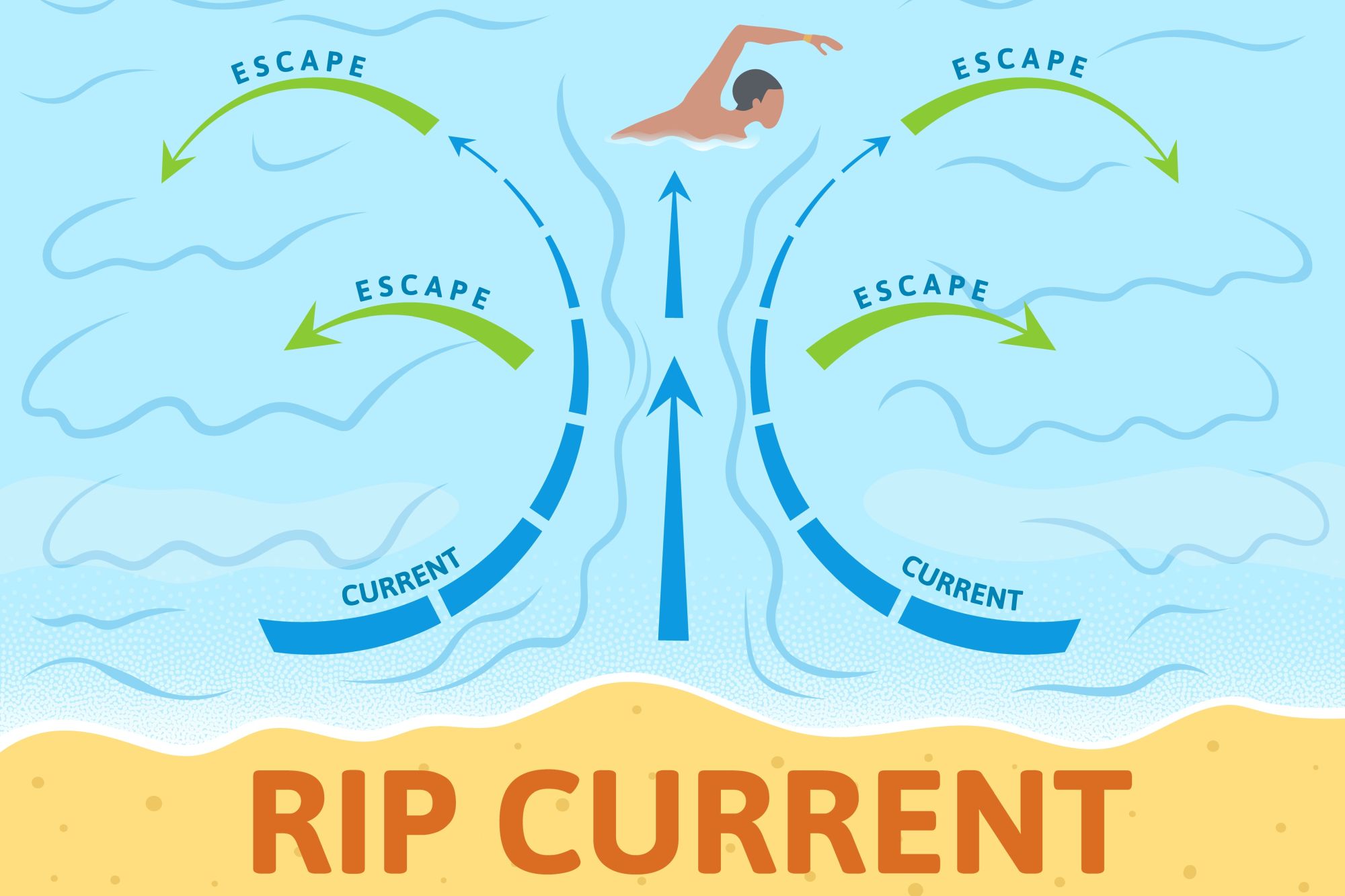
A rip current is a powerful channel of water that flows away from the shore towards the sea. They often form on surf beaches where breaking waves push water onto the shore. That water needs to find a way back out to sea, creating a fast-moving current.
Despite their strength, rip currents don’t pull you underwater. Instead, they carry swimmers away from the beach, which can quickly become frightening if you’re not expecting it.

Are Rip Currents Common in Cornwall?
Yes. Cornwall’s Atlantic coastline experiences large swells and changing tides, making rip currents relatively common, particularly on popular surfing beaches.
Beaches such as Fistral Beach (Newquay), Perranporth Beach, Polzeath, Watergate Bay, Gwithian, Sennen Cove, and Constantine Bay can all experience rip currents depending on the tide, wave conditions and weather.
That doesn’t mean these beaches are unsafe—they are simply natural environments where it’s important to follow local advice and swim responsibly.

How to Spot a Rip Current
Rip currents can be difficult to recognise, but there are a few tell-tale signs to look out for.
Look for:
- A darker or deeper-looking channel of water.
- An area where there are fewer breaking waves.
- Choppy or rough-looking water between lines of breaking waves.
- Water that appears to be flowing out to sea.
- Foam, seaweed or debris moving steadily away from the shoreline.
- Remember that rip currents aren’t always obvious. If you’re unsure, ask a lifeguard before entering the water.

Swim Between the Red and Yellow Flags
Whenever possible, choose a beach patrolled by lifeguards and always swim between the red and yellow flags.
These areas are carefully positioned each day after lifeguards assess the changing conditions, helping you avoid hazards such as rip currents, strong waves and submerged obstacles.
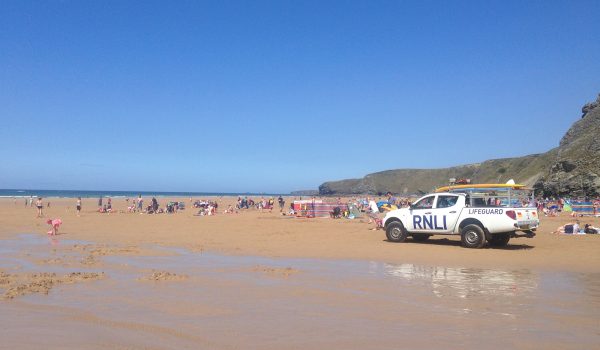
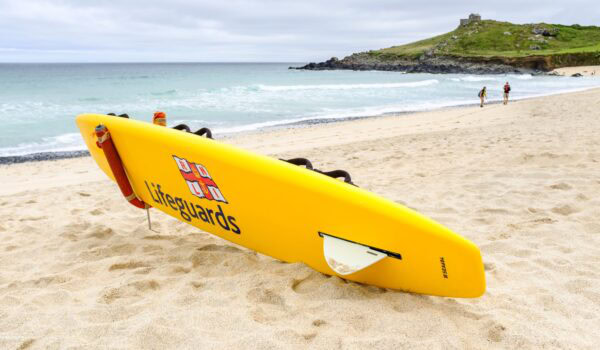
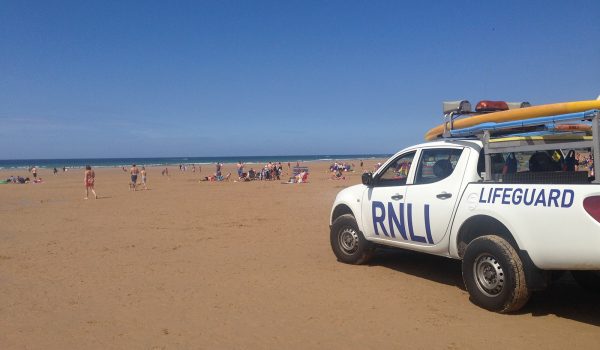
The safest beaches are usually those patrolled by the Royal National Lifeboat Institution (RNLI) during the main holiday season.
What to Do if You’re Caught in a Rip Current
The most important thing is don’t panic.
Rip currents are strong, but they are usually quite narrow. Knowing what to do can make all the difference.
1. Stay Calm
Conserve your energy and try not to fight the current.
2. Float
If you can, lie on your back and float. This helps you stay calm and keeps your energy for when you need it.
3. Raise Your Hand and Call for Help
If you need assistance, wave one arm and shout for help to attract attention.
4. Swim Parallel to the Shore
Rather than trying to swim directly back to the beach against the current, swim parallel to the shoreline until you’re out of the current.
Once free, you can swim back towards the beach at an angle.
If you can’t swim out of the current, continue floating until it weakens or help arrives.

If You See Someone Else in Trouble
Never enter the water to attempt a rescue unless you’re trained to do so.
Instead:
Throw something that floats if it’s safe to do so.
Alert the lifeguards immediately if they’re on duty.
Call 999 or 112 and ask for the Coastguard.
Encourage the person to float and stay calm if you can communicate with them.
Check the Conditions Before You Swim
Before heading into the sea:
- Read the beach safety signs.
- Check the lifeguard information boards.
- Observe the flag system.
- Ask lifeguards about the day’s conditions.
- Avoid swimming alone.
- Keep children within arm’s reach in the water.
- Sea conditions can change quickly, even on sunny days.

Enjoy Cornwall’s Coast Safely
A little knowledge goes a long way when enjoying Cornwall’s incredible beaches.
By understanding how rip currents work, choosing lifeguarded beaches, swimming between the flags and knowing what to do in an emergency, you can relax and make the most of your time by the sea.
Whether you’re surfing, paddling, bodyboarding or simply enjoying a swim, staying aware of the conditions helps ensure your Cornwall holiday is memorable for all the right reasons.
We wish you a safe and enjoyable stay, and many happy days exploring Cornwall’s beautiful coastline.